Can PCOS Cause Infertility? Treatment Options Explained
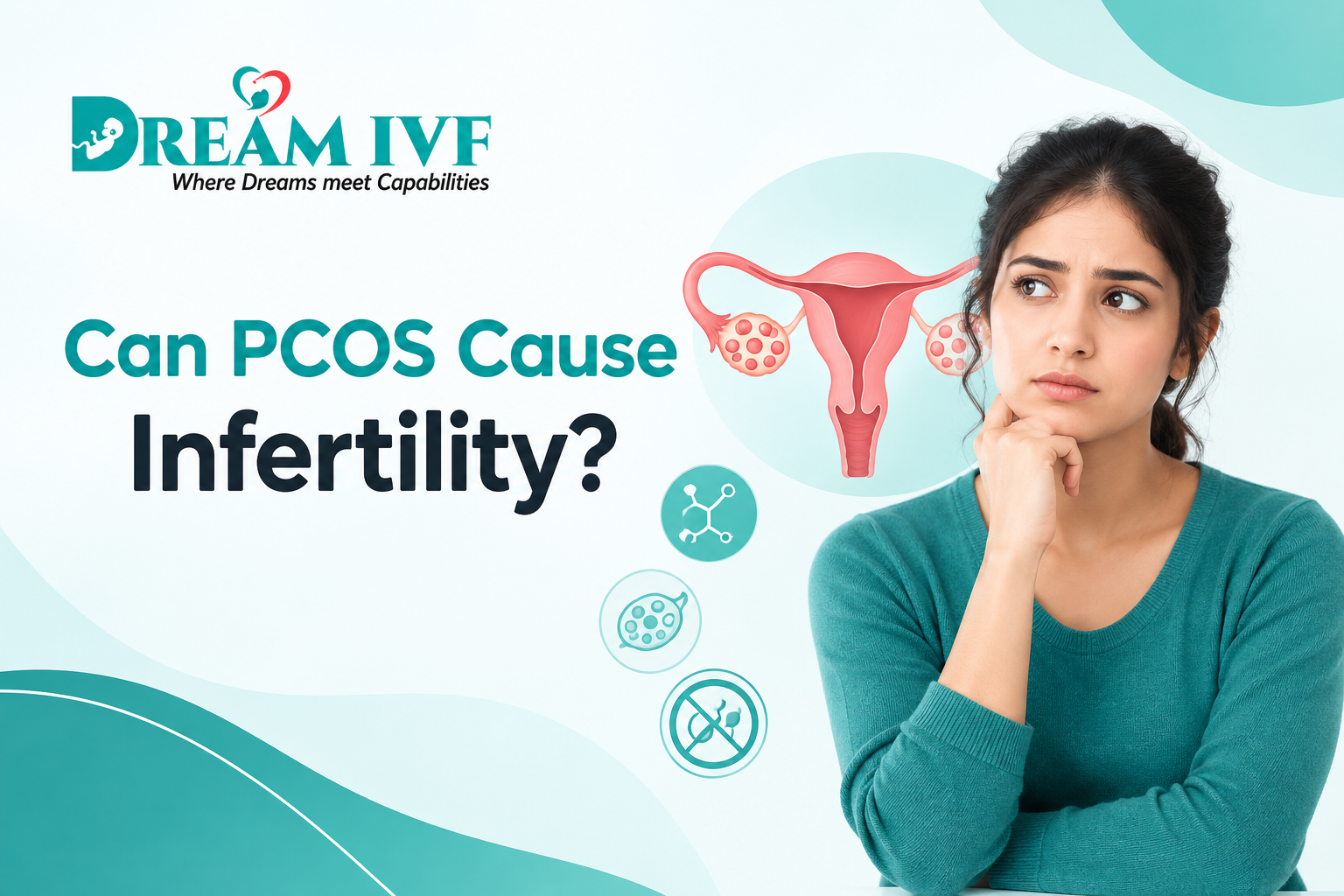
Polycystic ovary syndrome (PCOS) is a common hormonal condition that can affect periods, ovulation, and fertility. Many women with PCOS can get pregnant. However, some may have trouble getting pregnant because PCOS can cause irregular or missed ovulation.
The good news is that infertility cause by PCOS can often be treat with the right care and medical support. A fertility specialist can find the possible cause of infertility and suggest a treatment plan based on your needs.
What Is PCOS?
PCOS is a common hormonal condition that can affect how the ovaries work. It may cause irregular periods, hormone changes, and problems with ovulation.
Common signs of PCOS may include:
- Irregular or missed periods
- Difficulty with ovulation
- Acne or oily skin
- Increased facial or body hair
- Weight changes
- Thinning hair on the scalp
However, signs can vary from person to person. Therefore, having one or more signs does not always mean you have PCOS.
Can PCOS Cause Infertility?
Yes, PCOS can affect fertility. One of the main reasons is irregular or missed ovulation.
Ovulation happens when an ovary releases an egg. If ovulation is irregular, it can be harder to know the best time to try for pregnancy.
PPCOS can also affect hormone levels and the normal growth of ovarian follicles. As a result, some women with PCOS may take longer to get pregnant.
However, having PCOS does not mean that pregnancy is impossible. Many women with PCOS get pregnant with healthy lifestyle changes, medicines to support ovulation, fertility treatments, or supported reproductive treatments when needed.
How Does PCOS Affect Ovulation?
Normally, hormone changes help an egg grow and release from the ovary each month.
With PCOS, these hormone signals may become disturbed. As a result, an egg may not develop or be release regularly.
This can lead to:
- Irregular ovulation
- Fewer ovulatory cycles
- Irregular periods
- Difficulty timing intercourse
- Reduced chances of conception in some cycles
A fertility expert can check your menstrual history, hormone levels, ovulation, and other fertility factors to better understand your situation.
PCOS and Infertility: What Tests May Help?
If you have PCOS and are having trouble getting pregnant, your doctor may suggest different tests based on your signs and medical history.
These may include:
1. Medical and Menstrual History
Your doctor may ask about your periods, signs, past pregnancies, medicines, and how long you have been trying to get pregnant.
2. Blood Tests
Blood tests can check hormone levels and help find other conditions that may affect ovulation or fertility.
3. Ultrasound
An ultrasound helps your doctor check the ovaries and uterus. It can also help monitor the growth of follicles during fertility treatment.
4. Ovulation Assessment
Your doctor may use your menstrual cycle history, blood tests, ultrasound scans, or other methods to check if ovulation is happening regularly.
5. Other Fertility Tests
Infertility can affect either partner. Therefore, your doctor may suggest more tests, such as a semen analysis or a check of the fallopian tubes, depending on your situation.
Treatment Options for PCOS-Related Infertility
The right treatment depends on your age, fertility history, ovulation pattern, overall health, and other factors.
Here are some commonly use ways:
1. Lifestyle Changes
For some women with PCOS, healthy lifestyle habits can support overall health. They may also help improve regular periods and ovulation.
Your doctor may recommend:
- Regular physical activity
- A balanced diet
- Maintaining a healthy weight where appropriate
- Good sleep habits
- Managing stress
Even small, sustainable changes can support better overall health.
2. Ovulation-Inducing Medicines
If irregular ovulation is making it harder to get pregnant, a fertility expert may advice medicines to help trigger ovulation.
Letrozole is often advice as a first-choice medicine to help women with PCOS produce eggs and ovulate when trying to get pregnant.
Your doctor will decide whether this treatment is suitable for you and monitor your response when needed.
3. Metformin
Some women with PCOS may have insulin resistance or other health concerns. In some cases, a doctor may advice metformin as part of their treatment.
However, metformin is not right for everyone and should only be taken on medical advice. Your fertility expert can decide if it is suitable for your treatment plan.
4. IUI Treatment
Intrauterine insemination (IUI) may be consider for some couples when appropriate.
During IUI, prepare sperm is place directly into the uterus around the time of ovulation. Your doctor may use medicines to support ovulation and monitor the growth of follicles.
5. IVF Treatment
In vitro fertilisation (IVF) may be advice when other treatments have not worked, when other fertility problems are present, or when your doctor feels IVF is the best option for you.
During IVF, doctors collect eggs from the ovaries and fertilise them with sperm in a laboratory. The resulting embryo can then be transfer into the uterus.
Women with PCOS may respond strongly to fertility medicines. Therefore, fertility experts carefully plan and monitor treatment to lower the risk of problems, such as ovarian hyperstimulation syndrome (OHSS).
Can Women With PCOS Get Pregnant Naturally?
Yes. Many women with PCOS can become pregnant naturally.
However, the chances of pregnancy may be lower when ovulation does not happen regularly. Some women may get pregnant after making healthy lifestyle changes, while others may need fertility treatment.
If you have irregular periods and are trying to get pregnant, a fertility expert can help find the cause and suggest the right next step.
When Should You See a Fertility Specialist?
Consider speaking with a fertility specialist if you:
- Have very irregular or absent periods
- Know that you have PCOS and are worry about fertility
- Have been trying to conceive without success
- Have other known fertility concerns
- Want personalised advice before starting fertility treatment
You do not need to wait until fertility problems become severe to seek professional advice.
PCOS Does Not Mean You Cannot Become a Mother
A PCOS diagnosis can feel worrying when you are planning a family. However, having PCOS does not always mean you will have trouble getting pregnant.
With proper evaluation and personalised treatment, many women with PCOS can get pregnant. The right treatment depends on your health, ovulation, fertility history, and other factors.
At Dream IVF, we plan fertility care based on your individual needs. Our team offers fertility evaluation, ovulation support, IUI, IVF, ICSI, and other fertility treatments with careful medical guidance.
If you are having trouble getting pregnant because of PCOS, a fertility medical visit can help you understand your treatment options and decide on the next step with confidence.
Conclusion
PCOS can affect fertility mainly by causing irregular or missed ovulation. However, having PCOS does not mean pregnancy is impossible. With proper care, lifestyle changes, fertility medicines, IUI, or IVF when needed, many women with PCOS can change their chances of getting pregnant.
If you have PCOS and are worry about fertility, consult a qualify fertility specialist for personalise advice and a suitable treatment plan.
Follow up Instagram and Facebook for more information.
Frequently Asked Questions
Can PCOS cause permanent infertility?
No. PCOS can cause irregular ovulation and make it harder to get pregnant. However, it does not mean permanent infertility. Many women with PCOS get pregnant naturally or with fertility treatment.
What is the best treatment for PCOS infertility?
There is no single treatment that works best for everyone. Doctors may suggest lifestyle changes, ovulation medicines, IUI, or IVF based on your fertility needs and other factors.
Can I get pregnant with PCOS without IVF?
Yes. Many women with PCOS get pregnant without IVF. Depending on your situation, pregnancy may happen naturally or with treatments that help support regular ovulation.
Is IVF successful for women with PCOS?
IVF can help some women with PCOS get pregnant. However, success can depend on factors such as age, egg and sperm health, embryo quality, and other fertility problems. Your fertility specialist can explain your individual chances.
Does PCOS affect egg quality?
PCOS mainly affects ovulation and follicle growth. However, having PCOS does not automatically mean your eggs are of poor quality. Egg quality depends on several factors, including age.
Can lifestyle changes improve fertility with PCOS?
Healthy lifestyle habits can support your overall health and may help improve regular periods and ovulation in some women. Your doctor can suggest healthy changes based on your individual needs.