
Infertility is no longer a rare medical condition. Across India, thousands of couples silently struggle with delayed pregnancy, failed conception attempts, recurrent miscarriages, and emotional stress linked with infertility. During this journey, many people come across terms like IVF and test tube baby, but confusion still exists regarding whether these are different treatments or the same thing.
As fertility awareness increases, patients deserve medically accurate, experience-based, and trustworthy information before making important reproductive decisions. This detailed guide explains the real difference between IVF and test tube baby treatment, how the procedure works, who may need it, success rates, myths, risks, emotional realities, and expert-backed fertility guidance based on current reproductive medicine practices.
Understanding IVF and Test Tube Baby
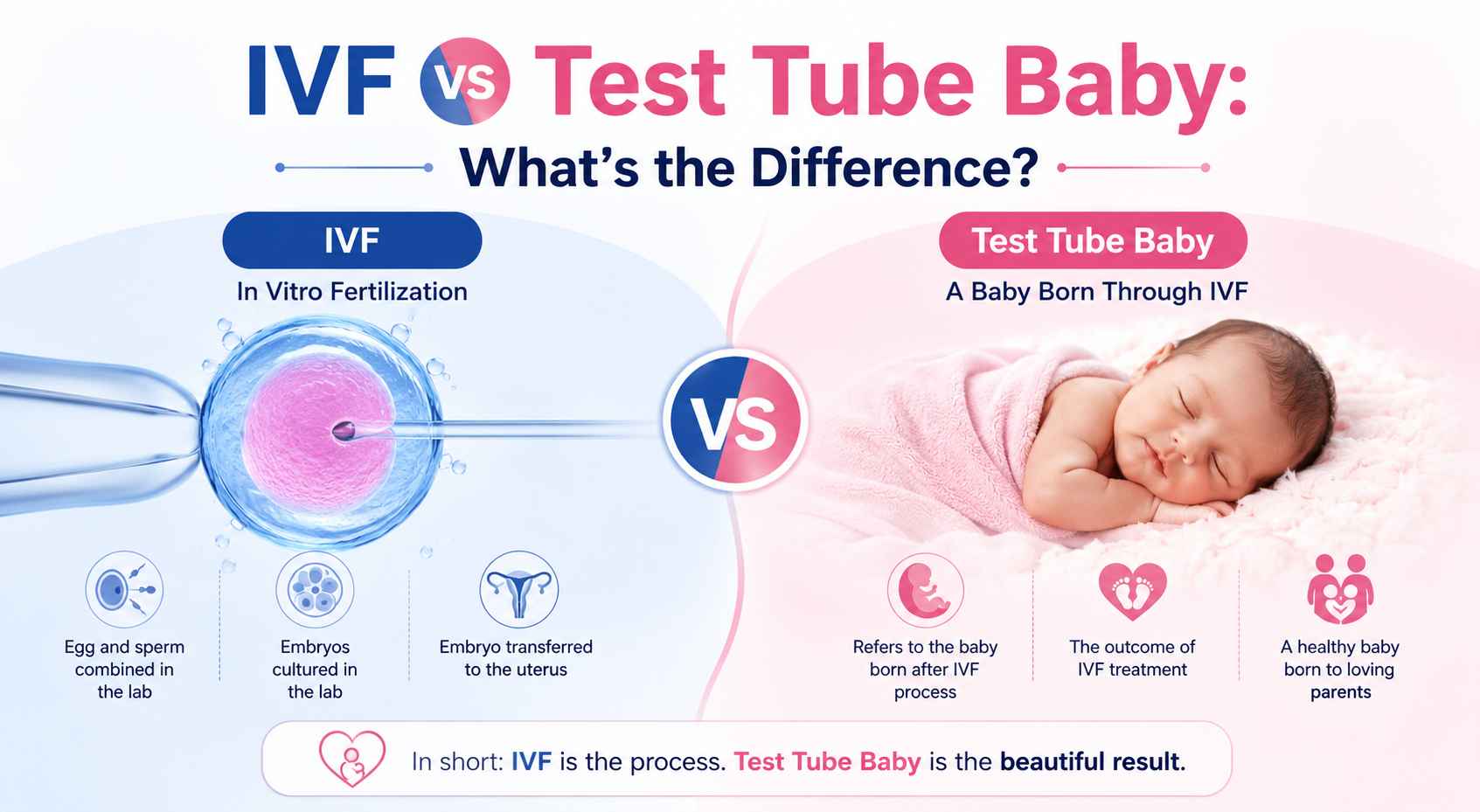
The terms IVF and test tube baby are often used interchangeably, but technically they are not exactly the same thing.
What Is IVF?
IVF stands for In Vitro Fertilization. It is an advanced assisted reproductive technology in which fertilization occurs outside the human body inside a specialized embryology laboratory.
During IVF:
- Eggs are collected from the ovaries
- Sperm is collected from the male partner
- Fertilization happens in a controlled lab environment
- Healthy embryos are transferred into the uterus
IVF is one of the most widely used fertility treatments globally for couples struggling with infertility.
What Is a Test Tube Baby?
A test tube baby is a baby conceived through IVF treatment. The phrase became popular decades ago when people believed fertilization occurred inside a laboratory test tube. In reality, fertilization occurs in culture dishes under highly controlled laboratory conditions.
So medically:
- IVF is the treatment process
- Test tube baby refers to the child born through IVF
There is no biological difference between a naturally conceived baby and a baby born through IVF.
IVF vs Test Tube Baby: The Actual Difference
| IVF | Test Tube Baby |
| Medical fertility treatment | Baby conceived through IVF |
| Procedure performed in fertility clinic | Result of successful IVF |
| Includes ovarian stimulation, fertilization, embryo transfer | Final outcome after pregnancy |
| Scientific term | Common public term |
Why Accurate Fertility Information Matters
Many couples delay fertility treatment because of fear, social stigma, misinformation, or myths spread online. Incorrect information can increase emotional stress and reduce the chances of timely treatment.
According to fertility specialists, age plays a major role in reproductive success, especially for women above 35. Delaying proper fertility evaluation may reduce egg quality and overall pregnancy chances.
This is why consulting an experienced fertility specialist or best gynecologist at the right time is extremely important.
Who May Need IVF Treatment?
IVF is generally recommended when natural conception becomes difficult or other fertility treatments fail.
Common Female Fertility Conditions
Blocked Fallopian Tubes
When the fallopian tubes are damaged or blocked, sperm and egg cannot meet naturally.
PCOS
Polycystic Ovary Syndrome may affect ovulation and hormonal balance.
Endometriosis
This condition can damage reproductive organs and affect implantation.
Low Ovarian Reserve
Women with reduced egg quantity or poor egg quality may require IVF.
Advanced Maternal Age
Fertility naturally declines with age, especially after 35.
Common Male Infertility Problems
Male infertility contributes significantly to conception difficulties.
Low Sperm Count
Reduced sperm numbers may lower fertilization chances.
Poor Sperm Motility
Weak sperm movement affects the sperm’s ability to reach the egg.
Abnormal Sperm Morphology
Irregular sperm shape may reduce successful fertilization.
Severe Male Factor Infertility
Advanced techniques like ICSI are often combined with IVF in such cases.
Other Reasons Couples Choose IVF
- Unexplained infertility
- Recurrent pregnancy loss
- Failed IUI cycles
- Genetic disorder prevention
- Fertility preservation before cancer treatment
Step-by-Step IVF Procedure Explained by Fertility Experts
Understanding the IVF journey helps reduce anxiety and allows couples to prepare mentally, physically, and financially.
1. Initial Fertility Consultation
The fertility specialist reviews:
- Medical history
- Menstrual history
- Previous pregnancy history
- Lifestyle factors
- Fertility reports
Tests may include:
- Hormonal blood tests
- Ultrasound scans
- Semen analysis
- Thyroid testing
- Ovarian reserve assessment
At a best IVF hospital, treatment plans are usually personalized according to age, infertility cause, and reproductive health.
2. Ovarian Stimulation
Natural pregnancy usually releases one egg monthly. IVF treatment uses hormone injections to stimulate multiple eggs for higher fertilization chances.
Patients are monitored through:
- Ultrasound follicle tracking
- Hormone level testing
- Ovarian response assessment
This stage typically lasts 8 to 14 days.
3. Egg Retrieval Procedure
Once follicles mature, doctors perform egg retrieval under mild sedation.
Using ultrasound guidance:
- A thin needle retrieves eggs from the ovaries
- The procedure takes around 20 minutes
- Most women return home the same day
4. Sperm Collection and Preparation
The sperm sample is carefully processed in the laboratory to select the healthiest sperm.
For severe male infertility:
- Surgical sperm retrieval may be needed
- Advanced sperm selection methods may improve outcomes
5. Fertilization Inside IVF Laboratory
This is the stage where IVF and the term “test tube baby” connect. Fertilization occurs in a specialized fertility laboratory under strict temperature, humidity, and air-quality controls.
In some situations, fertility experts use ICSI:
- A single healthy sperm is injected directly into the egg
- Common in severe male infertility cases
Laboratory quality plays a major role in embryo development and IVF success.
6. Embryo Monitoring and Development
Embryologists monitor embryo growth for several days.
The embryos are evaluated based on:
- Cell division quality
- Growth speed
- Morphology
- Development pattern
The healthiest embryo is selected for transfer.
7. Embryo Transfer
The embryo transfer procedure is simple and generally painless.
A soft catheter places the embryo inside the uterus under ultrasound guidance.
Most fertility specialists now prefer single embryo transfer to reduce multiple pregnancy risks.
8. Pregnancy Confirmation
After approximately 10 to 14 days:
- Blood tests check pregnancy hormone levels
- Ultrasound confirms implantation and fetal heartbeat
This waiting period is emotionally challenging for many couples and requires proper support.
Is a Test Tube Baby Normal?
Yes. Scientifically and medically, IVF babies are normal babies.
Once implantation occurs:
- Pregnancy develops naturally inside the uterus
- The baby receives nourishment normally
- Physical growth remains natural
- Mental development is similar to naturally conceived children
Globally, millions of healthy babies have been born through IVF treatment.
IVF Success Rates: What Couples Should Realistically Expect
Success rates vary between patients because infertility is highly individual.
Factors Affecting IVF Success
Age of the Woman
Younger women usually have higher pregnancy rates because of better egg quality.
Embryo Quality
Healthy embryos improve implantation chances.
Sperm Quality
Good sperm health supports fertilization and embryo growth.
Uterine Health
Implantation depends heavily on uterine conditions.
Lifestyle Factors
Smoking, alcohol, obesity, stress, poor sleep, and unhealthy diet can reduce fertility outcomes.
Fertility Clinic Expertise
A best IVF hospital with advanced embryology labs and experienced fertility specialists can improve treatment success.
Emotional Impact of Infertility and IVF
Infertility affects both physical and emotional wellbeing.
Couples often experience:
- Anxiety
- Social pressure
- Relationship stress
- Fear of treatment failure
- Depression after unsuccessful cycles
Mental health support is extremely important during fertility treatment.
Experienced fertility centers usually recommend:
- Counseling support
- Stress management
- Emotional wellness guidance
- Couple communication support
Common Myths About IVF and Test Tube Babies
Myth: IVF Babies Are Weak
There is no scientific evidence supporting this claim.
Myth: IVF Always Causes Twins
Modern IVF practices aim for healthy singleton pregnancies.
Myth: IVF Is Only for Women
Male infertility contributes to nearly 50 percent of infertility cases.
Myth: Bed Rest Is Necessary After Embryo Transfer
Most women can continue normal light activities after transfer.
Myth: IVF Guarantees Pregnancy
No fertility treatment guarantees success in every cycle.
Risks Associated With IVF Treatment
IVF is generally safe when performed by experienced specialists, but certain risks may exist.
Ovarian Hyperstimulation Syndrome
Excessive ovarian response to fertility medications may occur rarely.
Multiple Pregnancy
Transferring multiple embryos may increase pregnancy complications.
Ectopic Pregnancy
Rarely, implantation may occur outside the uterus.
Emotional Stress
Repeated failed cycles can affect emotional health significantly.
A trusted best gynecologist can help manage these risks through proper monitoring and individualized treatment.
How to Improve Fertility Naturally During IVF
Lifestyle improvements can support reproductive health and treatment outcomes.
Eat Nutrient-Rich Foods
Focus on:
- Fresh vegetables
- Fruits
- Protein-rich meals
- Healthy fats
- Whole grains
Maintain Healthy Body Weight
Balanced weight supports hormonal function.
Improve Sleep Quality
Hormonal regulation depends heavily on proper sleep.
Reduce Stress
Meditation, yoga, counseling, and relaxation techniques may help.
Avoid Smoking and Alcohol
Both negatively affect egg and sperm quality.
Choosing the Right Fertility Center
Selecting the right fertility clinic is one of the most important decisions during infertility treatment.
Look for:
- Experienced fertility specialists
- Qualified embryologists
- Modern IVF laboratory
- Transparent communication
- Ethical treatment practices
- Individualized fertility planning
- Good patient counseling systems
A reliable best IVF hospital focuses not only on pregnancy rates but also patient safety, emotional care, and long-term reproductive health.
Final Thoughts
There is no real difference between IVF and a test tube baby. IVF is the medical fertility procedure, while a test tube baby is the baby conceived through that procedure. Understanding this difference can help couples make informed, confident, and emotionally balanced fertility decisions.
Modern reproductive medicine has transformed infertility treatment by offering hope to couples who once believed parenthood was impossible. With accurate diagnosis, timely medical intervention, advanced fertility technology, and emotional support, many couples successfully achieve healthy pregnancies today.
If you have been trying to conceive without success, consulting an experienced fertility specialist or best gynecologist can help identify the underlying cause and guide you toward the right treatment plan.
Choosing a trusted best IVF hospital with ethical fertility practices, experienced embryologists, transparent treatment protocols, and compassionate patient care can make a meaningful difference throughout your fertility journey.
See also: IVF vs IUI: Which Fertility Treatment Is Better?
Frequently Asked Questions
Is IVF painful?
Most procedures involve minimal discomfort and are performed under sedation.
How long does IVF take?
One IVF cycle generally takes 4 to 6 weeks.
Can IVF fail?
Yes, success varies based on multiple fertility factors.
Can IVF babies live normal lives?
Absolutely. IVF babies grow and develop normally.
What age is best for IVF?
Women below 35 generally have higher IVF success rates.